
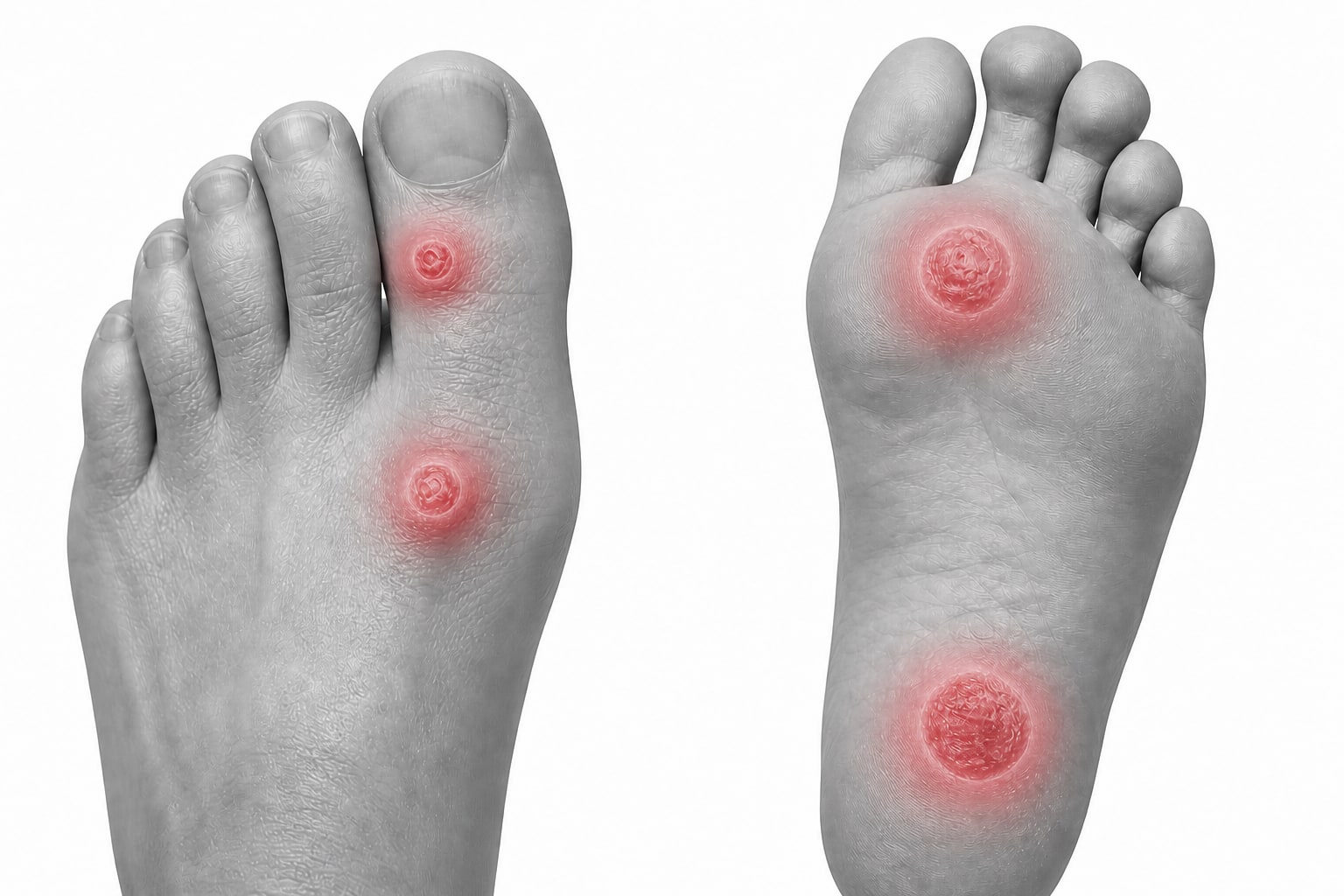
Corns and calluses are thickened areas of skin that develop where the foot experiences repeated pressure or rubbing. They can form over a prominent joint, under a high pressure area, or where a shoe repeatedly contacts the skin. An examination can help identify what is creating the pressure.
When to Request an Evaluation
- Painful or repeatedly returning thick skin
- Redness, drainage, or skin breakdown
- Uncertainty about whether the area is a callus, corn, wart, or another skin problem
- Any concerning pressure area in a person with diabetes or reduced sensation
Common Symptoms
These symptoms can also occur with other foot or ankle problems. An examination can help the doctor identify the cause.
- Thick or hardened skin
- A tender area when pressure is applied
- A raised spot over a toe or joint
- A broad area of thick skin under the foot
How the Doctor Evaluates Your Concern
Foot and ankle symptoms can have more than one cause. The doctor considers your symptoms, health history, and examination findings, then explains what the findings mean and what may come next. She discusses testing, procedures, or additional care only when the evaluation indicates they may be appropriate.
Things That Can Contribute
- Repeated pressure or rubbing
- Toe or foot shape
- Areas where a shoe repeatedly contacts the skin
- Changes in the way weight is distributed across the foot