Now accepting new patients - call (915) 995-1650 to schedule your first visitNow accepting new patients - call (915) 995-1650 to schedule your first visitNow accepting new patients - call (915) 995-1650 to schedule your first visitNow accepting new patients - call (915) 995-1650 to schedule your first visitNow accepting new patients - call (915) 995-1650 to schedule your first visitNow accepting new patients - call (915) 995-1650 to schedule your first visitNow accepting new patients - call (915) 995-1650 to schedule your first visitNow accepting new patients - call (915) 995-1650 to schedule your first visitNow accepting new patients - call (915) 995-1650 to schedule your first visitNow accepting new patients - call (915) 995-1650 to schedule your first visitNow accepting new patients - call (915) 995-1650 to schedule your first visitNow accepting new patients - call (915) 995-1650 to schedule your first visit
Patient dealing with Morton's Neuroma

Patient Education

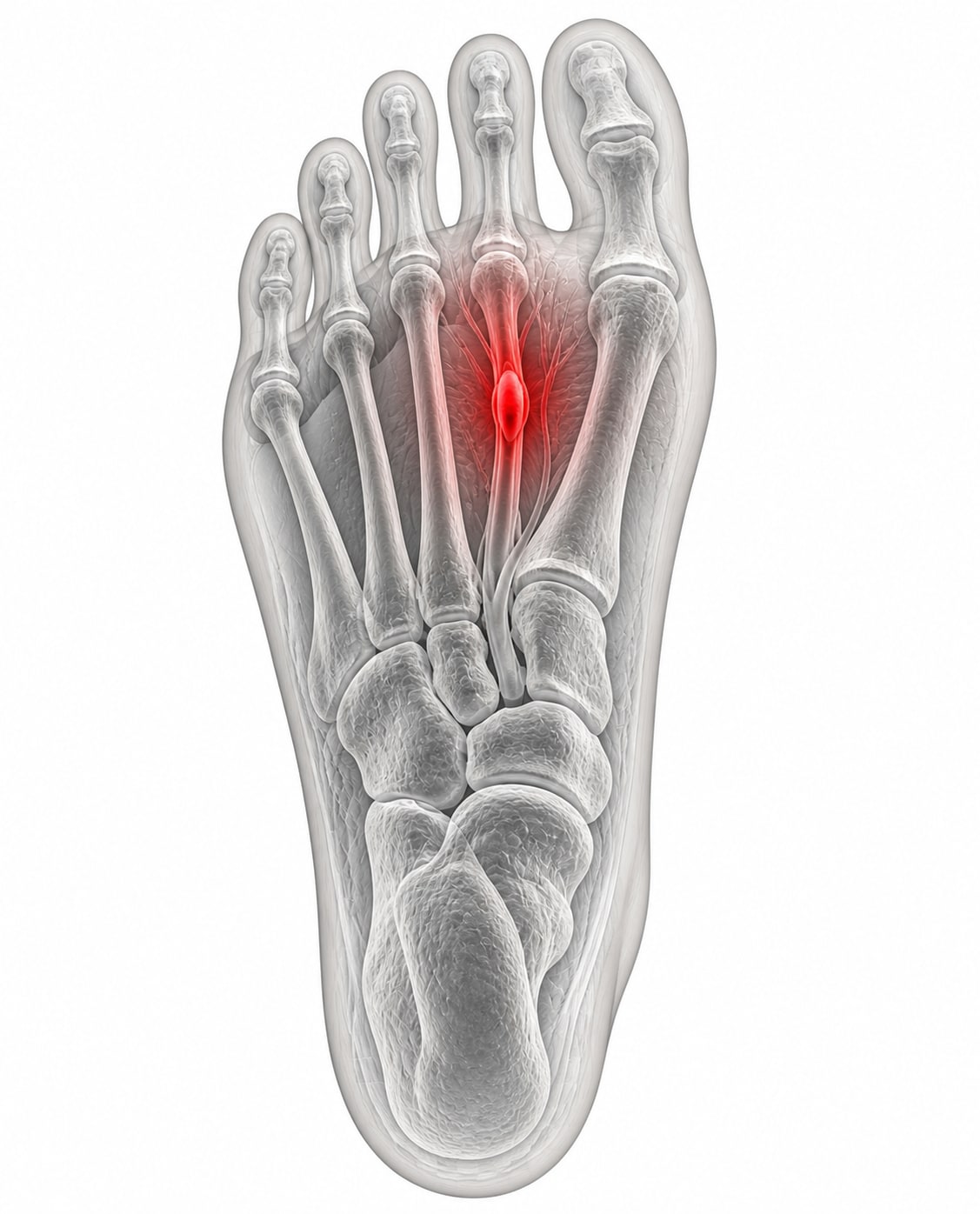
Morton's Neuroma

Educational information only: not a substitute for professional medical advice or an individualized podiatric evaluation.

Morton's neuroma is a compressive neuropathy of a common plantar digital nerve, most frequently within the third intermetatarsal space. Patients may report plantar forefoot burning, paresthesia, numbness, radiating digital pain, or the sensation of a foreign object beneath the metatarsal heads. Examination may reproduce symptoms with intermetatarsal compression and is used to distinguish neuroma from metatarsalgia, plantar plate pathology, stress injury, and other forefoot disorders.

When to Seek Podiatric Evaluation

  • Persistent burning or pain in the ball of the foot
  • Numbness or tingling that continues or is worsening
  • Pain that limits walking, exercise, or shoe wear
  • Symptoms that do not improve with footwear and activity changes

Common Symptoms

  • Burning pain between toes
  • Feeling of pebble in shoe
  • Numbness or tingling in toes
  • Pain worsened by narrow shoes

Podiatric Management and Treatment Options

Treatment often begins with nonsurgical options when appropriate. Surgery is considered only when indicated by the diagnosis, symptoms, and examination findings. The plan is individualized after evaluation.

Conservative Management

  • Wide toe-box shoes; avoid high heels and barefoot walking
  • Metatarsal pads and custom orthotics
  • Activity modification and ice
  • Anti-inflammatory medication (NSAIDs)
  • Physical therapy

Surgical Management When Clinically Indicated

  • Nerve decompression (releasing surrounding tissue)

Risk and Contributing Factors

  • Shoes that compress the forefoot or have high heels
  • Repetitive pressure on the ball of the foot
  • Bunions, hammertoes, flatfoot, or other foot mechanics that increase nerve pressure
  • Previous trauma to the forefoot

Foot Care and Risk Reduction

  • Choose shoes with adequate room in the forefoot
  • Limit prolonged use of high heeled or tightly tapered shoes
  • Use appropriate cushioning or support when recommended
  • Modify activities that repeatedly trigger forefoot symptoms
View all conditions

Concerned about Morton's Neuroma?

A podiatric evaluation can help determine whether your symptoms are associated with this condition or another foot or ankle disorder. Recommendations are based on clinical findings and, when appropriate, diagnostic studies.

Educational information only β€” not medical advice, diagnosis, or treatment.

(915) 995-1650
ADA Accessible FacilityAPMA Member PracticeBoard Certified Podiatric PhysiciansServing El Paso Since 2021