
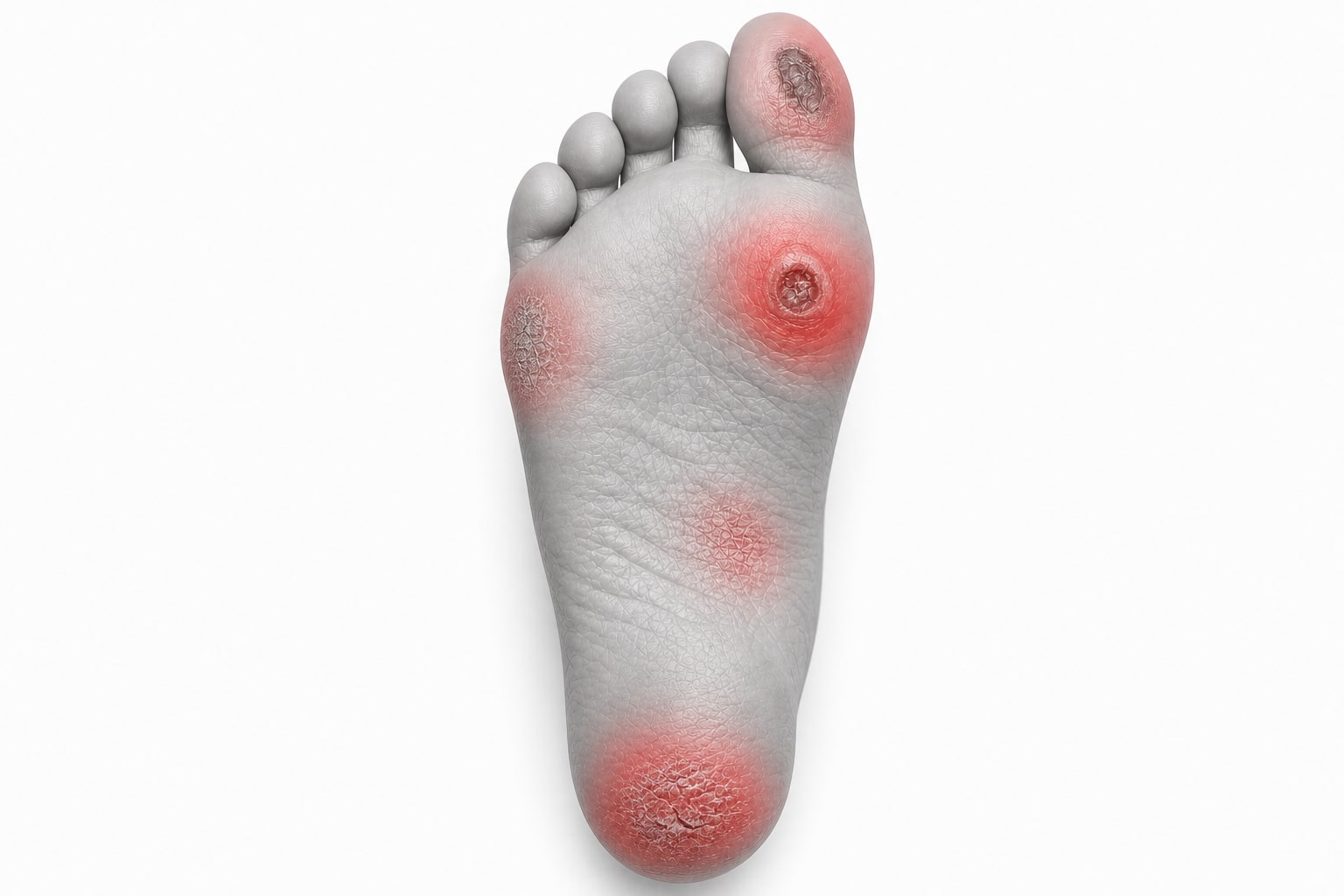
Diabetes can affect sensation in the feet, circulation, skin, nails, and would healing. Reduced sensation can make an injury harder to notice, while circulation problems can make healing more difficult. Regular professional evaluation can identify changes that may not be obvious to the patient.
When to Request an Evaluation
- Any new wound, drainage, redness, swelling, or skin breakdown
- A change in color or temperature of the foot
- New numbness, weakness, or loss of sensation
- A nail or skin problem that is becoming painful or difficult to manage
Common Symptoms
These symptoms can also occur with other foot or ankle problems. An examination can help the doctor identify the cause.
- Numbness, tingling, burning, or reduced sensation
- Skin or nail changes
- Swelling or changes in foot shape
- A wound, blister, or area that is not healing normally
How the Doctor Evaluates Your Concern
Foot and ankle symptoms can have more than one cause. The doctor considers your symptoms, health history, and examination findings, then explains what the findings mean and what may come next. She discusses testing, procedures, or additional care only when the evaluation indicates they may be appropriate.
Things That Can Contribute
- Longer duration of diabetes
- Reduced sensation in the feet
- Circulation problems
- Previous wounds, deformity, or amputation